This case study session takes the form of a conversation between Kadri Laas-Lepasepp and New York–based gallerist Margot Samel, examining professional relationships in contemporary art through the case study of Margot Samel Gallery.
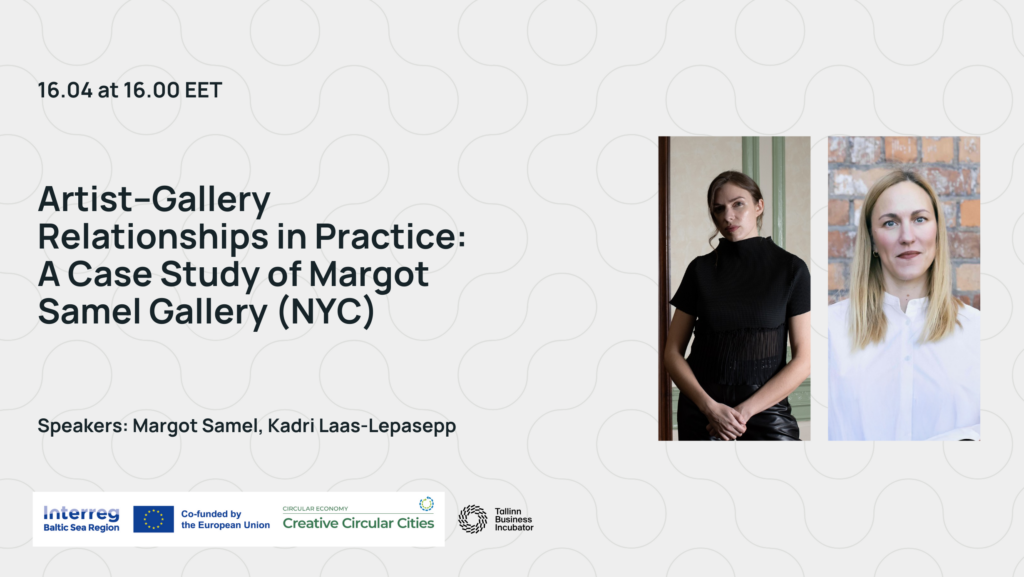
Drawing on firsthand experience from both perspectives, the discussion explores how long-term collaborations between artists and galleries are initiated, developed, and sustained.
The conversation addresses expectations on both sides of the artist–gallery relationship, communication practices, and the practical realities of representation, exhibitions, and sales. It also reflects on circularity and sustainability as integral parts of professional practice and the wider art ecosystem, including production choices, logistics, and responsible ways of working.
The session includes a concise introduction to Esther Art Fair, highlighting how alternative fair formats can create visibility and strengthen professional networks. Bringing together key themes from the previous modules, the conversation concludes with practical insights and next steps that participants can apply to their own professional practice.
Participants will gain valuable insight into the dynamics of working with galleries and the role of professional relationships in supporting sustainable artistic careers.
Speakers:
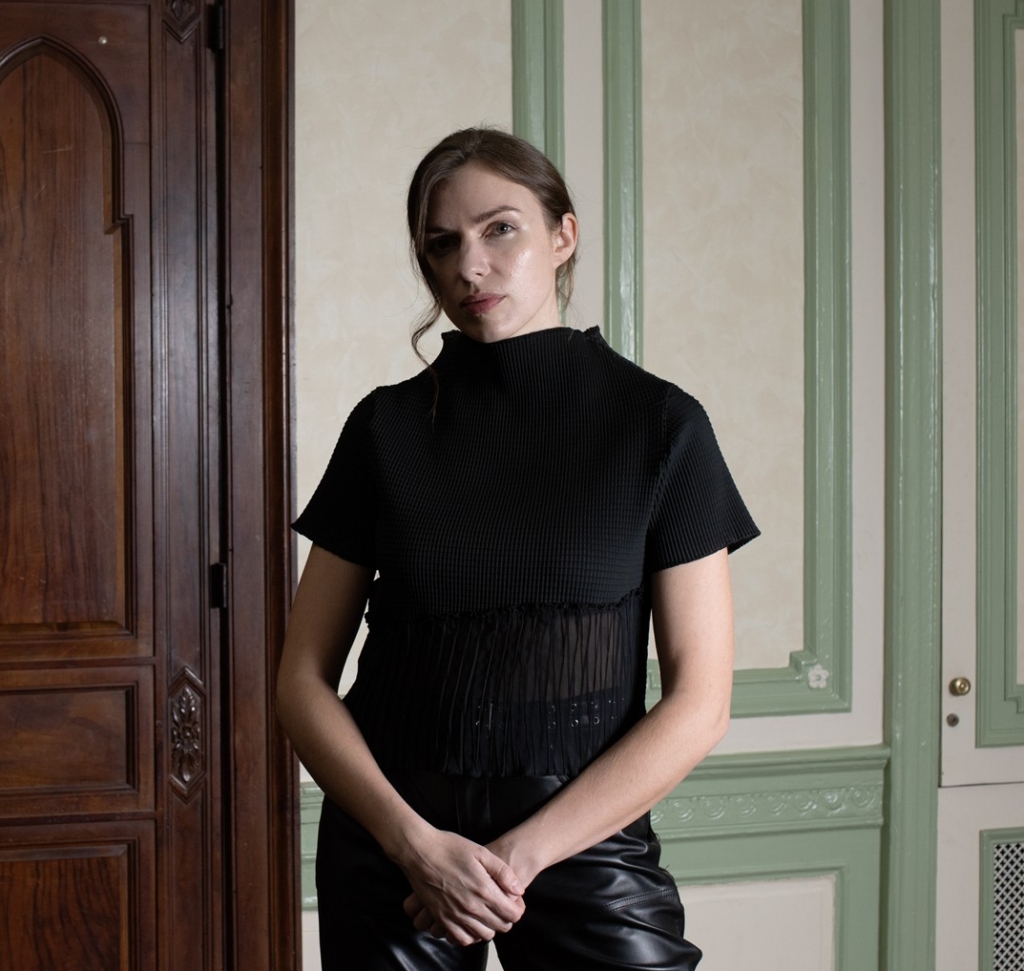
Margot Samel is an Estonian-born gallerist and art dealer based in New York. After gaining experience across galleries, museums, and artist-run spaces in Tallinn, Glasgow, and New York, she founded her eponymous gallery in Tribeca in May 2022.
Margot Samel Gallery is known for its research-driven programme, presenting artists of international backgrounds at different stages of their careers. The gallery has been particularly recognized for bringing Baltic artists—both historical and contemporary—into a New York context, with early exhibitions playing a key role in establishing this focus.
Samel is also a co-founder of Esther Art Fair, created together with Tallinn-based gallerist Olga Temnikova as a salon-style, alternative-format art fair within New York’s wider art-fair landscape. She studied art history at the University of Glasgow and has lived in New York for over a decade.
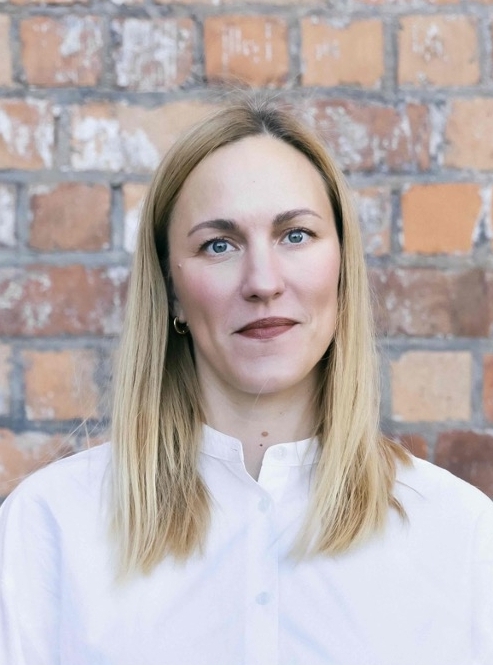
Kadri Laas-Lepasepp has over 15 years of experience in organizing and leading international contemporary art projects. With a background in art history from the Estonian Academy of Arts and a Master’s degree in Law from the University of Tartu, she has dedicated her career to strengthening the international visibility and professional framework of Estonian contemporary art.
She is a co-founder and Director of Operations of Kai Art Center, contributing to its development as an international and multifunctional art institution. Since 2012, her work has been closely connected to the Estonian Contemporary Art Development Center (ECADC), where she supports the international presence of Estonian artists and builds strategic partnerships across institutions and networks. As Director of Operations of ECADC, she is responsible for shaping the programme’s strategic direction and ensuring its practical value for both artists and partner organizations.
From 2016 to 2019, Laas-Lepasepp led the Tallinn Photomonth Contemporary Art Biennial. In 2023, she was appointed to the Supervisory Board of the Cultural Endowment of Estonia. Most recently, she served as the lead producer and chief organizer of the Shaping Cultural Futures forum in 2025, an international platform for contemporary art and cultural leadership that fostered sector-wide collaboration and produced tangible outcomes through shared presentations, recordings, and ongoing exchange.
Participation is FREE, but registration is requiered!
The event takes place online. The link will be sent to registered participants one day before.
This seminar is part of the CCC project incubation programme organised by Tallinn Business Incubator in spring, which aims to provide specialised training modules for the cultural and creative sectors focused on business development, internationalisation and the implementation of circular economy solutions.
This case-study session takes place within the How to Present and Stand Out as an International Visual Artist series (the other three seminars in the series are held in Estonian). In addition, the programme includes English-language series on Designing a Sustainable Product, Designing a Sustainable Service, Getting Ready for International Markets, and Storytelling and Communication.
The CCC incubation programme is intended for experts in the cultural and creative sectors, entrepreneurs and start-ups, designers, visual artists, students, and other interested participants.
The events are part of the Creative Circular Cities project, co-funded by the European Union’s Interreg Baltic Sea Region Programme 2021–2027. The project aims to support the transition to a circular economy at the local level by actively involving the cultural and creative sectors.