Everything is designed – therefore everything can be redesigned
As part of the Creative Circular Cities (CCC) project incubation programme organized by the Tallinn Business Incubators, several international seminar series took place in spring 2026. These focused on applying sustainable and circular thinking to product and service design. The trainings How to Design a Sustainable Product? and How to Design a Sustainable Service? brought together professionals from the creative and cultural sectors, entrepreneurs, designers, and other interested participants to discuss how to create solutions that are user-centered, economically viable, and environmentally responsible.
At the core of both seminar series was the understanding that sustainability is no longer merely an ethical choice, but an important strategic direction. For both products and services, this means re-evaluating existing ways of working and seeking solutions that reduce environmental impact, keep resources in use longer, and create long-term value.
Sustainable product design begins with a shift in mindset
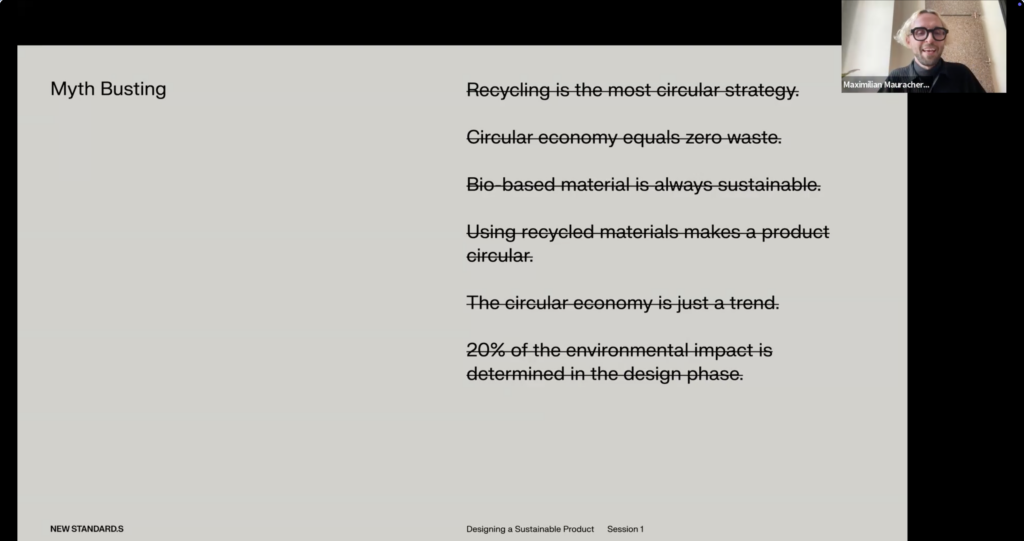
The four-part seminar series How to Design a Sustainable Product? focused on the principles of circular product development throughout the entire product lifecycle. Participants explored how to move from a linear “produce–use–dispose” model to more circular solutions, where materials remain in use as long as possible and products are designed with durability, repairability, modularity, and reuse in mind.
The seminar emphasized that sustainable product design is not only about introducing new materials, but primarily about a change in perspective. A product should not be seen as a standalone object, but as part of a larger system that includes usage patterns, future use cycles, repair possibilities, and end-of-life considerations. It was also highlighted that materials should not be treated merely as inputs in production, but as valuable resources whose quality and usability should be preserved for as long as possible.
Practical examples brought circular design closer to participants
The seminar was not purely theoretical; through participants’ own examples, it demonstrated how circular economy principles can be applied across a wide range of products and services. For instance, discussions addressed how to ensure that environmentally friendly packaging is also understandable for users. It was concluded that sustainable materials alone are not enough without clear information about who produced the item, how it can be reused, and where it should go at the end of its life. Suggested solutions included better labeling, QR codes, reuse instructions, and return or collection systems.
Another example involved the possibilities of recycled porcelain. It was noted that beyond material recycling, sustainable value can also be created through repair services, rental models, and refreshing or reglazing items. This highlighted that circular design does not always mean creating entirely new products, but often involves improving existing solutions, extending their use, and preserving their value.
Services also shape environmental impact
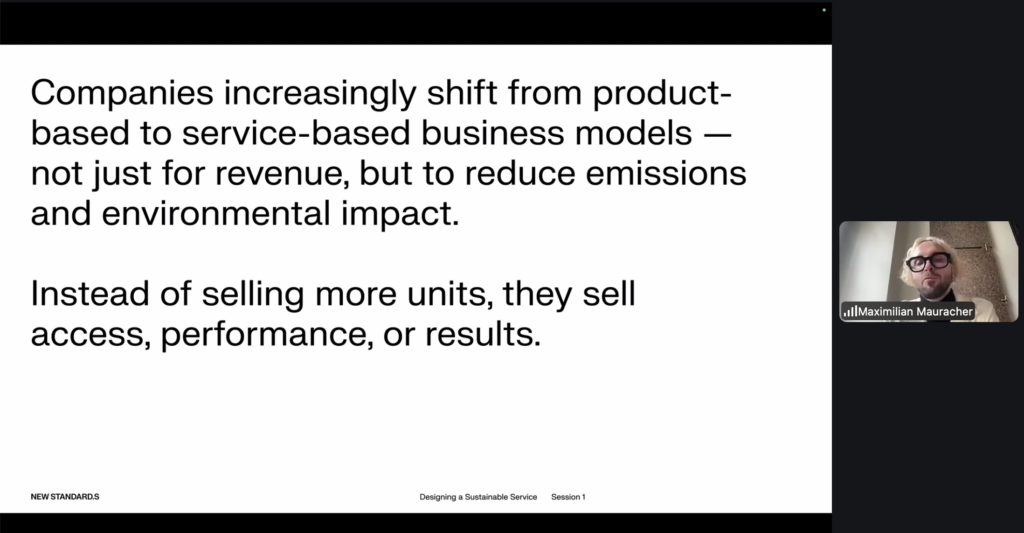
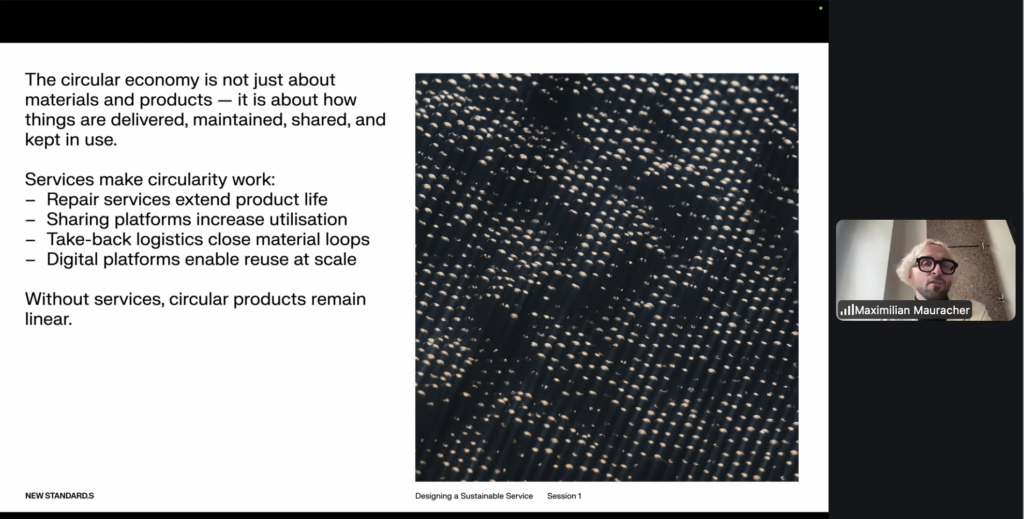
The two-part seminar series How to Design a Sustainable Service? expanded the sustainability discussion from products to services, digital solutions, and organizational processes. The training demonstrated that environmental impact arises not only from the production of physical goods, but also from service structures, digital workflows, data usage, infrastructure, and everyday operations.
Participants were given tools to assess the footprint of their services, map key impact sources, and identify ways to reduce them. The focus included optimizing services and digital systems, reducing digital waste, prioritizing renewable energy-based solutions, and integrating sustainable choices into organizational decision-making.
Discussions also highlighted that more sustainable service design often begins at the preparatory stage. For example, better collaboration before the development process can reduce unnecessary meetings, rework, and resource use. Early involvement of end users was also emphasized to ensure that services meet real needs and avoid unnecessary steps or burdens.
Why are these topics important for the creative and cultural sector?
For the creative and cultural sector, circular economy and sustainable design are becoming increasingly important, as they open new opportunities for innovation, international development, and responsible entrepreneurship. For both products and services, the issue is not only about reducing environmental impact, but also about creating solutions that are more durable over time, meaningful for users, and economically sustainable.
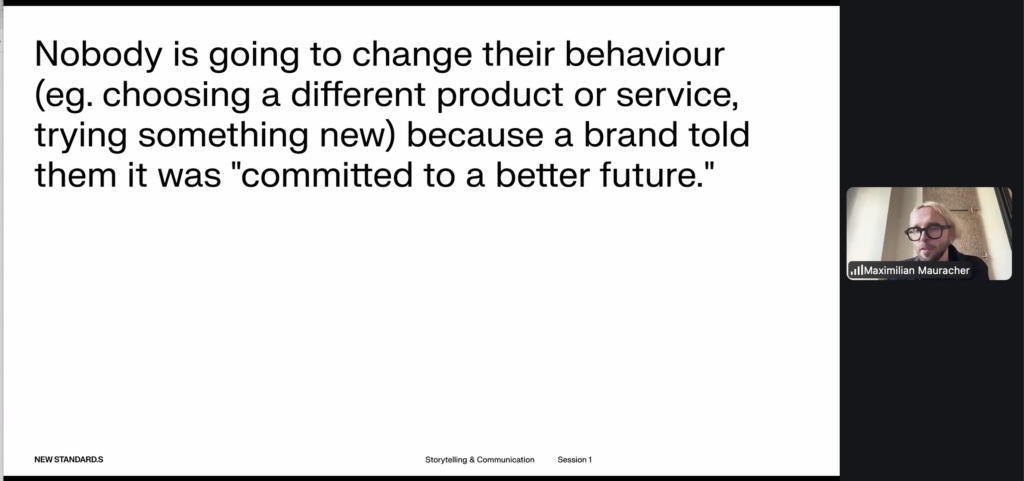
The seminar series showed that sustainability can manifest in many ways: better material choices, well-thought-out user instructions, enabling repair and reuse, more efficient service processes, or more conscious communication with clients and users. This holistic perspective helps make circular economy principles practical and applicable in everyday creative work and business.
Trainer Maximilian Mauracher combined strategy with practical experience
Both seminar series were led by internationally recognized designer, strategist, and creative director Maximilian Mauracher, whose work focuses on circular economy, sustainability, and design-driven transformation.
He studied at the University of Applied Arts Vienna and has worked for more than ten years with companies, cities, and organizations, including FREITAG, Decathlon, WWF, and the city of Berlin. As co-founder and CEO of NEW STANDARD.STUDIO, he helps international teams translate complex sustainability challenges into clear strategies, products, services, and narratives.
One of the central messages of the seminars was captured in the idea: “Everything is designed – therefore everything can be redesigned.” This reflects both the content of the seminars and the broader goal of the CCC project – to help creative and cultural sector professionals see change as an opportunity and discover new ways to create more responsible and impactful solutions.
The CCC project supports the transition to a circular economy
The seminar series took place as part of the the Creative Circular Cities project, co-funded by the European Union’s Interreg Baltic Sea Region Programme 2021–2027. The aim of the project is to support the transition to a circular economy at the local level by actively involving the cultural and creative sectors and providing practical knowledge, tools, and international collaboration.