CCC Mentoring Programme Delivers 123 Sessions with International Experts
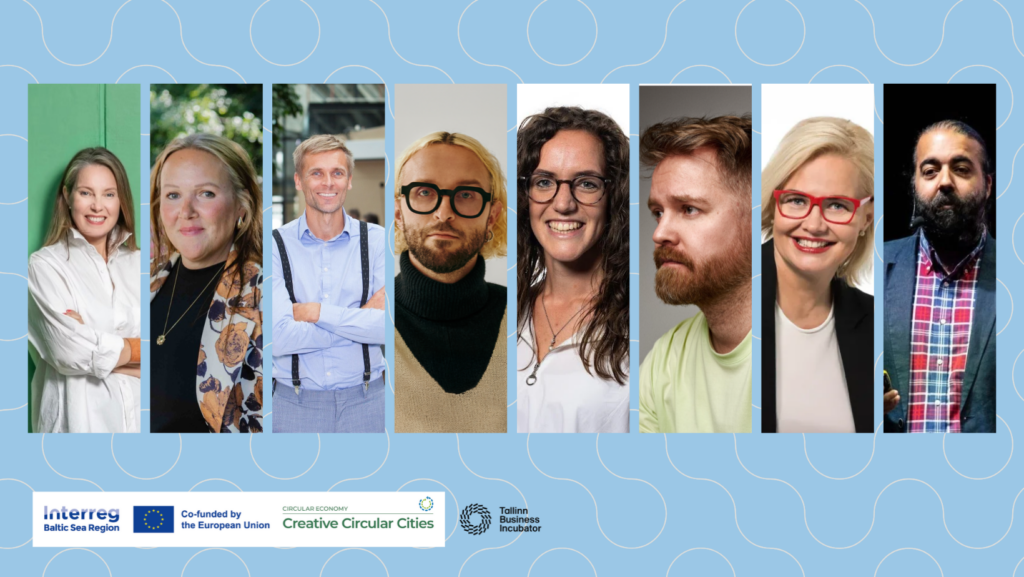
In the Creative Circular Cities (CCC) mentoring programme run by Tallinn Business Incubator, 38 creative businesses and practitioners took part in a total of 123 one-to-one mentoring sessions in less than a month. Eight international experts from Finland, Germany, Estonia and North America helped them develop their products and brands and prepare to enter new markets.
How do you reach a Finnish buyer? Is it better to sell directly in the US or through a partner? How do you present your artistic practice so that it catches the eye of an international curator? These were the kinds of questions participants brought to the programme, and they worked through the answers with practitioners who have walked the same path themselves. Topics ranged from circular design and impact assessment to target market analysis, digital marketing, B2B sales and artist portfolio development. On average, each participant had three mentoring sessions, and many discussed the same question with several experts from different angles.
From gut feeling to deliberate strategy
One of the participants was Johannes Säre, whose company Dream Team (Luup OÜ) provides technical production for contemporary art. The team brings an artist’s or curator’s idea to life, from materials and drawings through to installation and transport. Operating for nearly ten years, the company counts Estonia’s leading museums and art institutions among its clients. It now wants to develop its service more deliberately and reach international markets.
“The most valuable part was having experienced people take an outside look at a business I had mostly been running on gut feeling. Both mentors knew my field and my markets, so the conversations were substantive, not generic. Minna helped me see the export picture as a whole, while Andrus got very practical and focused on the digital side. I came away from both conversations with concrete next steps.
The biggest shift was realising that I shouldn’t be selling a list of services. What I’m really selling is an outcome and the confidence that the project will be finished on time, safely and exactly as the artist envisioned it. Until now, all my work has come through word of mouth. Now I’m shaping my positioning deliberately, and I have a clear plan for entering the Nordic markets, starting with Finland.”
– Johannes Säre, Dream Team (Luup OÜ)
A strong international mentor network
The quality of the programme rested on mentors who know their markets and fields from the inside. Rolf Ekroth has built a sustainable fashion brand that has been showcased at Copenhagen Fashion Week. Maximilian Mauracher runs a B Corp-certified circular economy consultancy in Berlin. Andrus Kiisküla, Head of Marketing at HUUM, makes decisions about the US market every week. Minna Storm has spent more than 20 years helping companies break into the Nordic market. Farid Singh has mentored more than 250 startups from 50 countries. Lea Baudner helps companies adapt to the expectations of the German market. Petra Kaksonen has created campaigns for leading North American brands. Laura Köönikkä has served as curator of the Finnish Pavilion at the Venice Biennale.
What did the mentors notice?
“The companies I met were very different, but their challenges were similar. They had strong creative ideas and a clear interest in sustainability, but they often needed help finding the right partners, developing their products or shaping a growth plan. What struck me was how much potential these small businesses already have. The ideas and the knowledge are there, but they lack the resources or contacts to take the next step.
I encourage small creative businesses to explore EU-funded programmes and projects. There are opportunities for material innovation, circular design and international collaboration that many small businesses may not even be aware of. Finding the right partners and funding can be more valuable than trying to do everything alone.”
– Rolf Ekroth, mentor, circular design, sustainable product development and material innovation
“Some arrived with a similar question: how do we talk about sustainability without overclaiming? The products are ready and thought through, but what was missing was a clear sense of which message to lead with and what data to monitor for substantiation. All mentees showed a lot of passion for their business and products. Many had spent years on materials and construction. One founder went through three producers before production was right. You can feel that care in the products, even if it doesn’t always show in the communication yet.”
“The Baltic origin is an asset worth showing – also for customers in Germany or Western European countries. Made in Europe is getting more recognition as a lot of companies outsource their production from countries far away.“
– Maximilian Mauracher, mentor, circular economy metrics and impact assessment, and German target market analysis
“Understanding the American consumer is major challenge: how they think, make purchasing decisions, communicate, and what they expect from brands. Companies need to understand how to adapt their products, messaging, and business approach to meet those expectations.”
“All the companies were well-established businesses in Estonia or the European market. They had strong foundations, entrepreneurial ambition, and a clear desire to take their businesses to the next level by exploring opportunities in the US. I was impressed by how driven, ambitious, and well-prepared the companies were. They were genuinely committed to exploring the US market and willing to learn and adapt. There is a tendency to think of the US as one homogeneous market. In reality, it is an incredibly diverse market, with significant differences in consumer behaviour, regional preferences, competition, and business culture.”
“Most companies are at different stages of readiness for entering the US market. Some are ready to take their first steps, while others need more preparation and market understanding. My advice would be to start small, identify a specific target market or customer segment, and test the waters. Get your foot in the door, build relationships, learn from customer feedback, and adapt along the way. The US market offers enormous potential, but don’t assume that what works in Europe will automatically work in America. Start building your network early, think long-term, and be prepared to invest time in establishing trust. The opportunities are there, but success comes from understanding the market and showing up consistently.”
– Petra Kaksonen, mentor, product and marketing material adaptation, and B2B sales in the US market
What’s next?
Participant feedback also shows what kind of support is needed next. Creative practitioners need contacts with exhibition organisers and festivals, introductions to potential clients and distribution partners, and advice on funding cultural projects. They are also looking for in-depth help with digital marketing and support in markets beyond the Nordics.
Tallinn Business Incubator brings entrepreneurs together with experienced mentors and partners so that ideas and businesses can grow faster and with less risk.
Are you an entrepreneur? Follow our newsletter / website / social media so you don’t miss the next programme.
Are you an expert or organisation who could help in exactly these areas, or would like to collaborate on creating international programmes? Get in touch!
The programme was carried out as part of the Creative Circular Cities project, co-funded by the European Union’s Interreg Baltic Sea Region Programme 2021–2027. The project aims to engage the cultural and creative sectors and to promote the transition to a circular economy at the local level.